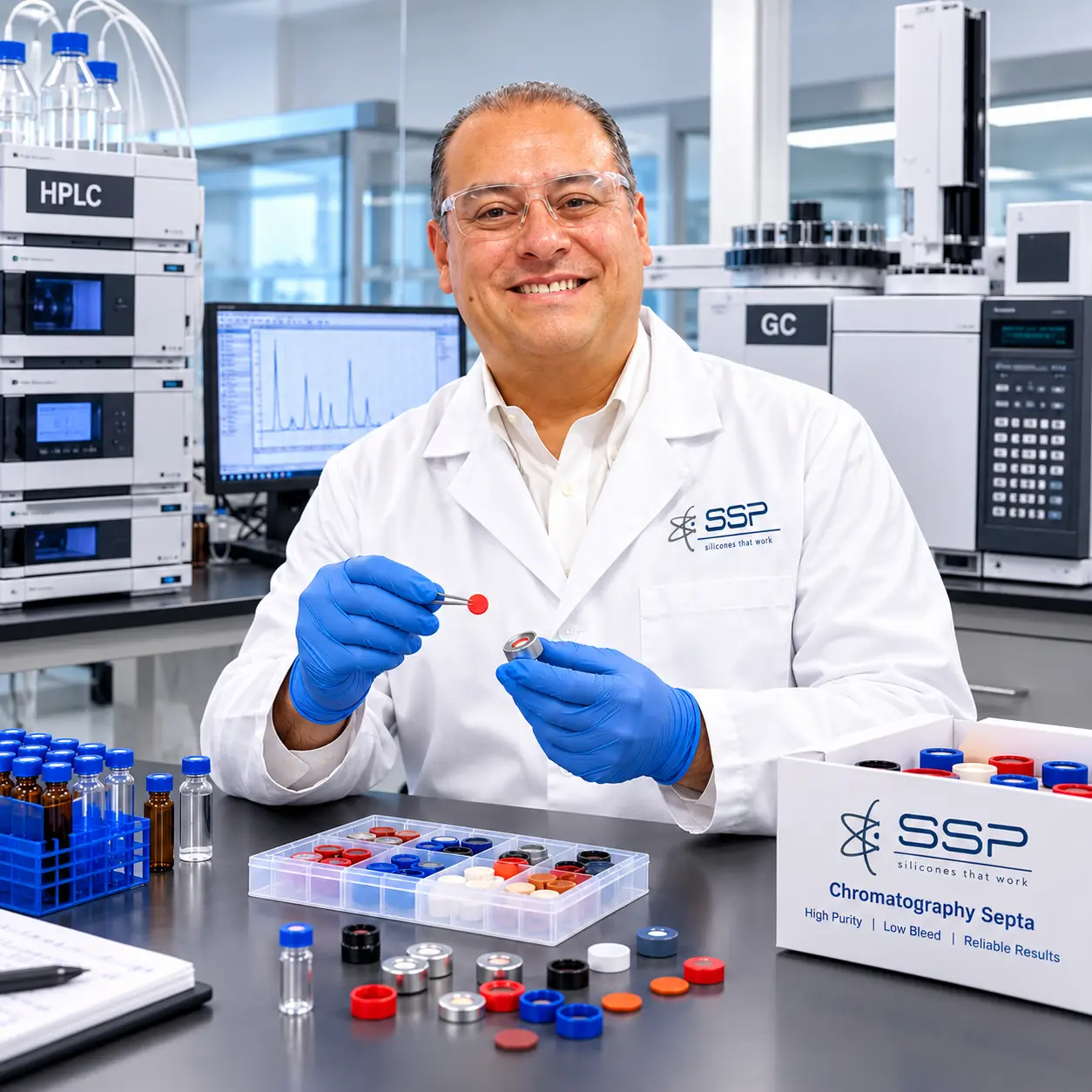
Specialty Silicone Products (SSP) uses platinum-cured silicones to produce septa that are ultra-clean for analytical purity. Compared to peroxide-cured silicones, our platinum-cured elastomers are more inert and less likely to interact with your samples. Platinum-curing is more expensive, but our platinum-cured silicones don’t contain byproducts that cause contamination by leeching or bleeding.
Silicone Curing Systems
Silicones are formed into solids by curing or cross-linking. The most common curing systems use peroxide or platinum. The peroxide or free radical system is the oldest cross-linking chemistry for silicones but releases byproducts such as volatile organic acids (VOAs). By contrast, the platinum curing or addition system releases no byproducts during processing.
SSP only uses silicones that are platinum-cured for the highest purity. Our ultra-clean silicones have lower levels of extractables, chemical compounds that migrate from a material under conditions such as elevated temperature or surface exposure. Compared to peroxide systems, platinum curing also offers greater control over cure rates and crosslinking.
Analytically Pure, Medical Grade
SSP supplies analytically pure, medical-grade silicone septa. At our manufacturing facility in Ballston Spa, New York (USA), we use state-of-the-art cutting and insertion equipment to create both standard and custom septa. We also bond septa to caps using a proprietary technology that won’t affect the silicone’s analytical properties.
To learn more about platinum-curing and why you need platinum-cured silicone septa, please contact us.