
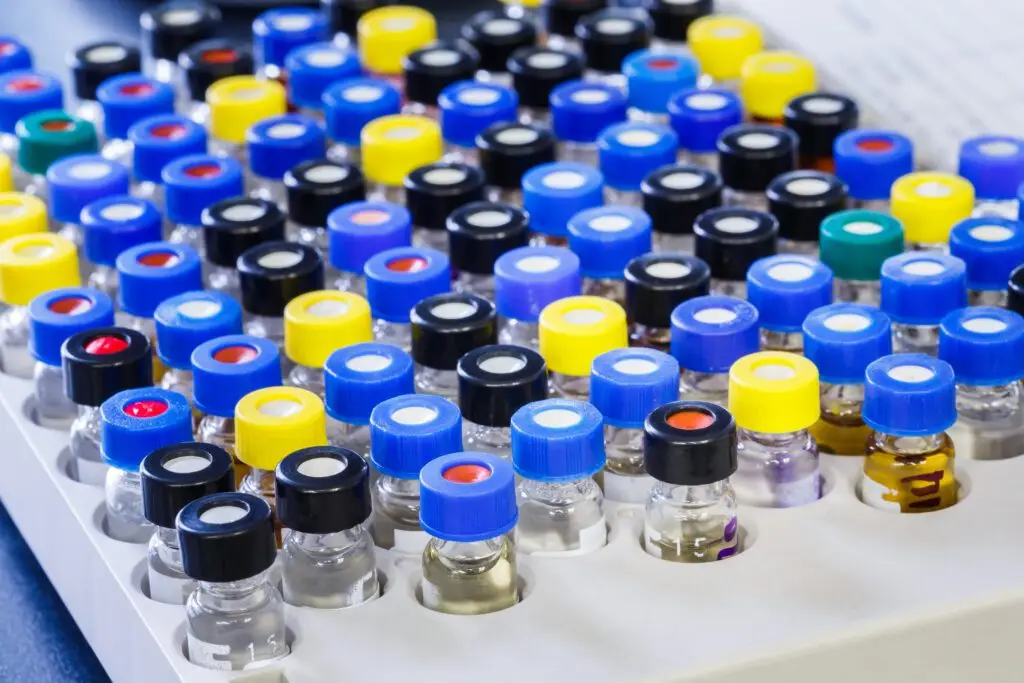
In High Performance Liquid Chromatography (HPLC), system performance is often evaluated in terms of pumps, detectors, and columns. However, seemingly minor consumables such as septa can have a substantial impact not only on analytical results and column lifespan, but also on overall instrument reliability and uptime.
The use of high-quality septa is critical in maintaining stable operation, minimizing system contamination, and reducing unplanned instrument downtime. Septum selection directly influences sample integrity, baseline stability, and the long-term condition of the chromatographic column, making it a key factor in both data quality and operational efficiency.
This article contains the following sections:
- The Role of the Septum in HPLC Systems
- Common Septum Materials and Their Properties
- Effects of Septum Material Selection on Chromatographic Results
- How the Septum Influences HPLC Column Performance and Lifespan
- Septum Quality, System Performance, and Instrument Uptime
- Special Considerations: Septa for Per- and Polyfluoroalkyl Substances Analysis
- Key Considerations for Septum Selection
- Septa Best Practices
Specialty Silicone Products (SSP) makes high-quality septa and invites you to contact us for a quote or to request more information.
The Role of the Septum in HPLC Systems
The septum serves as a sealing interface through which the autosampler needle passes during sample injection. It must maintain mechanical integrity under repeated punctures while remaining chemically inert toward a wide range of solvents and analytes. Because it is in direct contact with the sample pathway, any degradation or incompatibility can introduce contaminants into the system.
Common Septum Materials and Their Properties
Common septum materials include PTFE, silicone, and rubber-based materials. Composite septa made of PTFE and silicone are also used. Each has specific properties.
PTFE (Polytetrafluoroethylene)
PTFE is widely used due to its excellent chemical inertness and low extractable profile. It minimizes the risk of contamination and is particularly suitable for trace-level analysis. However, PTFE alone lacks elasticity and is typically combined with a backing material.
Silicone
Silicone septa offer high elasticity and resealing capability, making them suitable for high-throughput applications. A limitation is the potential release of siloxane compounds, which may appear as background signals in sensitive analyses, hence the importance of using high quality, low bleed septa.
Rubber-Based Materials
Butyl and natural rubber septa provide decent sealing performance but are more susceptible to chemical interaction and leaching, especially in the presence of organic solvents.
Composite Septa
PTFE/silicone septa combine the chemical resistance of PTFE with the mechanical resilience of silicone. The PTFE layer faces the sample, reducing contamination risk, while the silicone layer ensures effective sealing.
Polypropylene/silicone septa offer an effective balance of sealing performance, chemical resistance, and durability for a wide range of chromatographic applications. Their dependable performance and cost-effectiveness make them well suited for routine laboratory analyses, particularly in LC autosampler workflows. They are also commonly considered in PFAS analysis, where PTFE can’t be used.
How the Septum Effects Chromatographic Analysis
The septum’s effects on chromatographic analysis include baseline stability and background interference, sample integrity, and reproducibility.
Baseline Stability and Background Interference
Septa with high bleed characteristics can release volatile or semi-volatile compounds into the system. This results in increased baseline noise and the appearance of extraneous peaks, which can compromise detection limits and analytical accuracy. High-purity ultra-low bleed (ULB) septa are available, however.
Sample Integrity
Incompatible septum materials may adsorb analytes or introduce extractables. This can lead to reduced analyte recovery, altered peak areas, and compromised quantitation.
Reproducibility
Mechanical degradation of the septum over repeated injections can affect sealing efficiency. This may introduce variability in injection volume or allow air ingress, both of which negatively impact reproducibility.
How the Septum Influences HPLC Column Performance and Lifespan
The septum influences HPLC column performance and lifespan in terms of particulate contamination, chemical fouling, and pressure instability.
Particulate Contamination
Repeated needle puncture can generate septum fragments (coring). These particles may enter the flow path and accumulate in the column inlet frit, leading to increased backpressure and reduced column efficiency.
Chemical Fouling
Leachables from septum materials can adsorb onto the stationary phase, altering its surface chemistry. Over time, this can cause shifts in retention time, peak tailing, and irreversible degradation of column performance.
Pressure Instability
Compromised septa may result in minor leaks or inconsistent sealing, contributing to pressure fluctuations. Such conditions place additional stress on the column and associated system components.
Septum Quality, System Performance, and Instrument Uptime
Beyond material selection alone, the quality and correct use of septa play a critical role in both HPLC and UHPLC/UPLC system reliability. High-quality septa with controlled manufacturing tolerances, optimized hardness, and low particulate shedding contribute to consistent needle penetration and reliable sealing performance across extended injection sequences.
In UHPLC/UPLC systems, where operating pressures are significantly higher and system tolerances are more stringent, septum integrity becomes even more critical. Poor-quality or improperly selected septa can lead to microleaks, autosampler inconsistencies, and pressure fluctuations that negatively affect chromatographic stability.
Proper use of high-quality septa also has a direct impact on instrument uptime. Reduced septum coring and lower extractable levels help prevent contamination of injection ports, needle seats, and downstream components such as inlet frits. This minimizes the risk of clogging, carryover, and pressure instability, all of which are common contributors to unplanned maintenance events.
As a result, consistent use of application-appropriate, high-quality septa can improve overall system robustness, reduce maintenance frequency, and significantly decrease instrument downtime, particularly in high-throughput analytical environments.
Special Considerations: Septa for Per- and Polyfluoroalkyl Substances Analysis
PFAS analysis presents unique challenges due to the ultra-trace concentration levels typically measured and the widespread presence of fluorinated materials in laboratory consumables. Septum selection is therefore critical to avoid background contamination and false positives.
Avoid Fluoropolymer-Based Septa in Sample Contact
Although PTFE is widely regarded for its chemical inertness, it is a fluoropolymer and may act as a potential source of Per- and Polyfluoroalkyl Substances background contamination. In PFAS-focused workflows, PTFE-lined septa can contribute to elevated baseline signals or trace interferences, particularly for analytes such as PFOA and PFOS.
Consequently, direct sample contact with PTFE should be avoided whenever feasible. A suitable alternative is polypropylene (PP)-lined septa, which are PFAS-free and help reduce the risk of fluorinated background contamination in sensitive analytical methods.
System-Wide Consistency
Septa are only one potential contamination source. For reliable PFAS analysis, all consumables (vials, tubing, seals) must be evaluated for fluoropolymer content. Even small contributions from multiple sources can cumulatively affect results.
Key Considerations for Septum Selection
Septum selection should be based on method requirements rather than general preference:
- Use ultralow bleed, chemically inert materials for trace analysis
- Ensure compatibility with the solvent system, particularly with high organic content
- Consider durability and resealing performance in high-throughput environments
- Minimize analyte adsorption for sensitive or low-concentration compounds
- For PFAS methods, prioritize fluoropolymer-free or PFAS-certified materials
Septa Best Practices
Follow these best practices with septa.
- Replace septa at regular intervals to prevent degradation-related issues
- Use high-quality, application-specific septa from reputable manufacturers
- Monitor chromatographic performance for early signs of contamination or variability
- Ensure proper needle alignment to reduce coring and mechanical damage
- Validate all consumables when developing or transferring PFAS methods
Ask SSP for HPLC Septa
Although frequently underestimated, septum material selection plays a critical role in ensuring analytical accuracy and preserving column integrity in High Performance Liquid Chromatography workflows. This importance is further heightened in mass spectrometry-based analyses, where ultra-trace sensitivity can amplify the effects of even minimal contamination. Careful selection and routine control of septa and related chromatography consumables can significantly improve data quality and extend column lifespan.
When combined with the use of high-quality components and proper operational practices, septa also play a direct role in maintaining HPLC and UHPLC system performance, improving robustness, and reducing maintenance-related downtime across demanding analytical workflows.
Importantly, the short-term cost savings associated with purchasing lower-quality or inexpensive septa can be misleading. Minor upfront savings are often outweighed by downstream consequences, including increased instrument downtime, repeated analyses, corrective maintenance interventions, and, in some cases, premature column replacement.
In practice, compromising on septum quality can therefore result in significantly higher operational costs and reduced laboratory efficiency over time. For high-quality septa for HPLC, contact SSP.