
What Are Extractables and Leachables in Chromatography Septa?
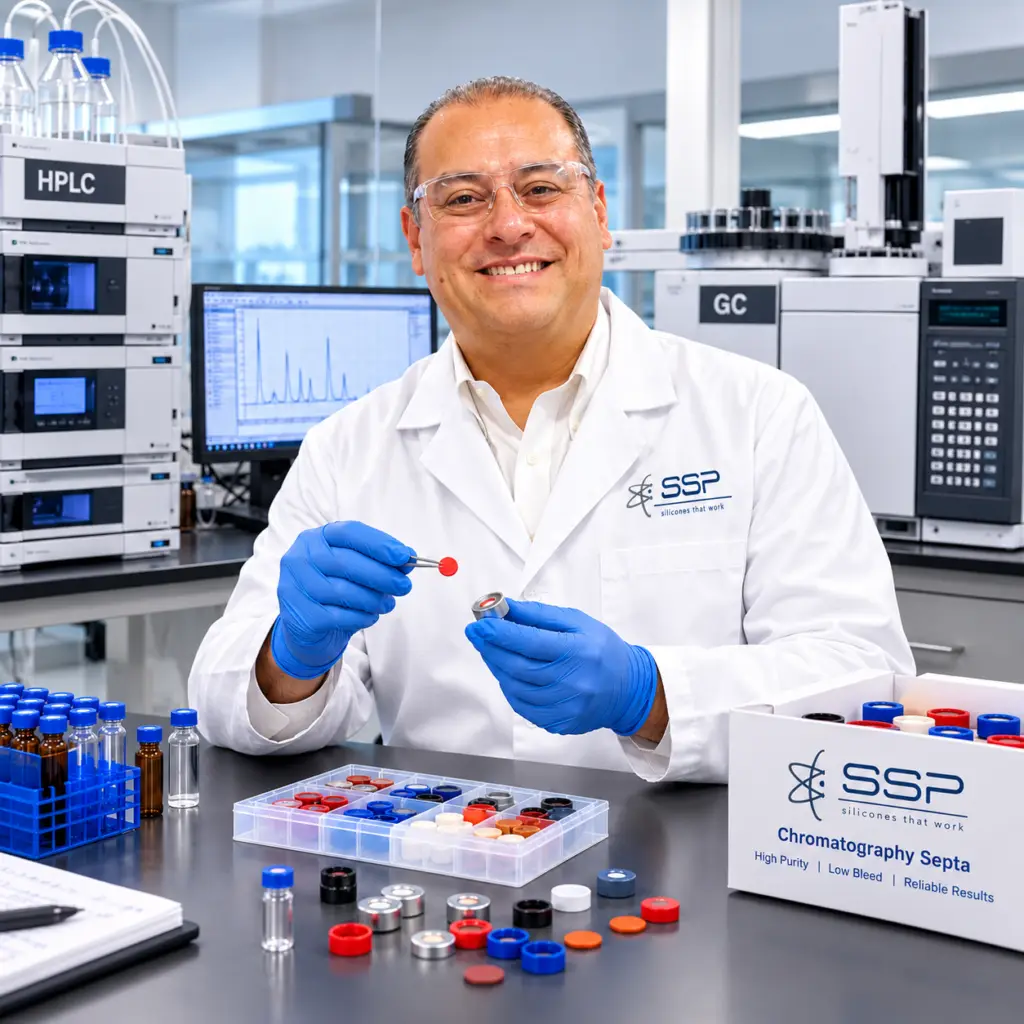
When selecting chromatography consumables, laboratories often focus on vial size, cap design, septum material, or compatibility with a particular instrument. But one factor that can have a significant impact on analytical results is often overlooked: extractables and leachables. A septum may represent only a small component of a chromatography consumables workflow, but it can be part of the sample environment and, depending on the vial and closure configuration, may be exposed to the sample or its headspace. Under certain conditions, compounds from the septum can migrate into the sample and potentially interfere with analysis. Understanding extractables and leachables is therefore an important part of selecting the right septum, particularly for trace-level analysis, GC-MS, LC-MS, pharmaceutical applications, environmental testing, and other analytical methods where contamination can compromise results. What Are Extractables? Extractables are chemical compounds that can be removed from a material when it is exposed to specific solvents, temperatures, or other controlled laboratory conditions. For chromatography septa, extractables can originate from several sources, including: Residual compounds from the manufacturing process Processing aids Additives or stabilizers Unreacted components Low-molecular-weight silicone species Residual curing-related compounds Other substances associated with the formulation or processing of the elastomer Extractables testing is generally performed under controlled and often deliberately aggressive conditions to determine what substances have the potential to migrate out of a material. The presence of an extractable does not automatically mean that it will contaminate a sample during normal use. Instead, extractables testing helps characterize what substances a material could release under defined conditions. What Are Leachables? Leachables are compounds that actually migrate from a material into a sample or surrounding environment during normal or reasonably foreseeable use. This distinction is important: Extractables = what can potentially come out of the material under defined test conditions. Leachables = what actually migrates into the sample during use. For example, a silicone septum may contain compounds that can be extracted under a laboratory test using an aggressive solvent. Whether those compounds will migrate into a particular sample during an actual chromatographic application depends on factors such as solvent composition, temperature, contact time, and the septum formulation. Why Do Extractables and Leachables Matter in Chromatography? Chromatographic analysis is often performed at very low detection levels. When an analytical method is designed to detect compounds at trace or ultra-trace concentrations, contamination from laboratory consumables can become significant. A compound introduced by a septum may appear as an unexpected peak, elevated background, or additional signal. This can lead to: Unexpected chromatographic peaks Elevated background Increased noise False positives Reduced sensitivity Poor reproducibility Difficulty identifying unknown compounds Potential interference with quantitative analysis The concern applies to both GC-MS and LC-MS, although the mechanism can be different. In GC-MS, volatile and semi-volatile compounds released from a septum during high-temperature analysis can contribute to chromatographic background. This is commonly referred to as septum bleed. In LC-MS, the concern is generally less about thermal septum bleed and more about extractables and leachables that can migrate into the sample or solvent. Because LC-MS can detect compounds at extremely low concentrations, even small amounts of contamination from a vial closure can potentially produce unexpected signals. Depending on the compound and analytical method, these signals can contribute to background, interfere with analyte detection, or complicate identification and quantification. GC-MS vs. LC-MS: Why the Septum Matters Differently The analytical environment of GC-MS and LC-MS is different, so the potential impact of a septum is different as well. GC-MS: Think About Bleed During GC analysis, the septum is exposed to elevated inlet temperatures. Volatile and semi-volatile compounds can be released from the septum and enter the carrier-gas stream. These compounds can travel through the column and reach the detector or mass spectrometer, potentially creating unwanted peaks or increasing background. For sensitive GC-MS applications, Ultra Low Bleed silicone septa can help reduce the potential contribution of the septum to chromatographic background. LC-MS: Think About Extractables and Leachables LC-MS does not subject the vial septum to the same high-temperature GC inlet environment. Instead, the concern is often the potential migration of compounds from the septum into the sample or solvent. This becomes particularly important when: Samples remain in vials for extended periods Organic solvents are used Samples are stored before analysis Trace-level compounds are being measured Highly sensitive mass spectrometric detection is used The sample matrix is particularly sensitive to contamination In LC-MS, unwanted compounds originating from a septum may appear as additional mass spectral signals or chromatographic peaks. Depending on their chemical characteristics and concentration, they may also complicate peak identification, contribute to background, or potentially interfere with sensitive quantitative methods. Therefore, LC-MS septum selection should consider extractables, leachables, chemical compatibility, and material purity, not simply whether the septum provides a good physical seal. What Is Septum Bleed? Septum bleed refers to volatile or semi-volatile compounds released from a septum, particularly when exposed to the elevated temperatures associated with gas chromatography. These compounds can enter the carrier-gas stream and reach the GC column and detector. In a mass spectrometer, they can contribute to background signals or produce peaks that are unrelated to the sample. The result can be an analytical “fingerprint” that has nothing to do with the compounds the laboratory is trying to measure. The risk becomes more significant when: GC inlet temperatures are high Long temperature programs are used Trace-level compounds are being analyzed The method relies on mass spectrometric detection Low background is critical The septum is subjected to repeated injections Why Ultra Low Bleed Septa Matter For sensitive GC and GC-MS applications, choosing a standard silicone septum may not provide the level of cleanliness required by the analytical method. Ultra Low Bleed (ULB) silicone septa are specifically designed to minimize the release of volatile and semi-volatile compounds during high-temperature GC applications. This can help reduce the contribution of the septum to chromatographic background and minimize the potential for unwanted peaks. SSP’s Ultra Low Bleed silicone septa are designed for applications where background contamination and septum bleed are critical considerations. By controlling the silicone