
Proper Cap and Septa Use on Chromatography Vials: Why It Matters More Than You Think
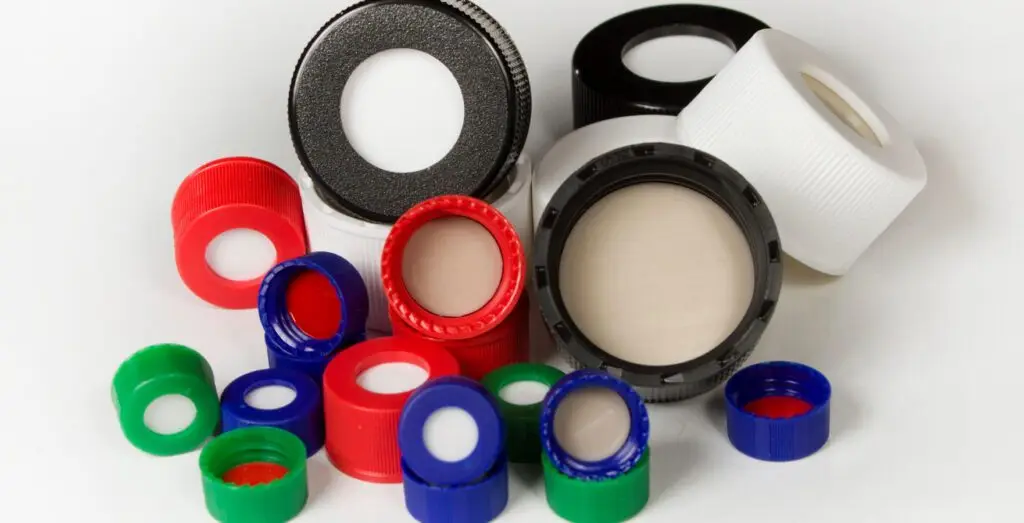
In chromatographic analysis, tiny details often decide whether results are pristine or problematic. Among these, the correct use of vial caps and septa plays a surprisingly powerful role. Improper sealing does not just risk leaks. It can quietly distort your data through evaporation, contamination, and inconsistent injection performance. Let’s unpack the mechanics behind this and why bonded cap and septa systems are often the unsung heroes of reliable analysis. What are the Mechanics of a Proper Seal? When using screw caps/vials, a proper seal is not accidental. It is engineered through the balance of forces acting on the septum. At its core, a proper seal is a combination of vertical and radial compression of the septa, generated by the torque used to secure the cap onto the vial. In simple terms, the septum is sandwiched between the top of the vial opening and the interior rim of the cap. When torque is correctly applied, it creates a tight, uniform seal that maintains septum position and prevents failure modes such as push through or leakage. Vertical Compression and Septum Sealing Vertical compression is the downward force applied when the cap is tightened. This force presses the septum firmly against the vial rim, forming the primary barrier against evaporation and contamination. Too little or too much vertical compression are problematic. Too little vertical compression Weak seal Increased evaporation of volatile samples Greater risk of contaminant introduction from the environment Too much vertical compression Septum deformation Reduced elasticity and resealing after puncture Potential distortion affecting autosampler needle entry. Radial Compression and Septum Sealing Radial compression occurs as the cap constrains the septum laterally, pressing it inward and stabilizing its position. The differences between proper radial compression and excessive radial compression are clear. Proper radial compression Keeps the septum centered Enhances seal uniformity Supports repeated needle punctures Excessive radial compression Causes bulging or warping Increases material stress Contributes to septa displacement Torque: Critical Control Variable and Source of Sealing Issues Torque is the driving force behind both vertical and radial compression and the most common source of sealing issues. Proper torque ensures a tight fit, good seal integrity, and prevents septa push through Insufficient torque leaves the septum loosely seated, allowing evaporation of volatile samples and compromising sample integrity Excessive torque can displace the septum toward the center of the cap, creating a concave deformation often described as a vacuum effect. This distortion weakens the seal and significantly increases the likelihood of septa push through In other words, torque behaves like a volume knob for compression. Too low and the seal whispers. Too high and it distorts. Septa Push Through: A Hidden Failure Mode Septa push through occurs when the septum is forced into the vial instead of remaining securely seated in the cap. This is typically driven by: Excessive torque Poor cap and septa compatibility Low quality or non-uniform septa Consequences include: Sample contamination Blocked autosampler needles Inconsistent injection volumes Complete loss of seal integrity Once push through occurs, the system effectively loses its barrier, turning a sealed environment into an exposed one. Sample Evaporation: The Silent Data Killer Even a slightly compromised seal can allow volatile components to escape over time. This is especially critical in chromatography, where sample integrity directly impacts quantitation. Effects of evaporation include: Changes in analyte concentration Reduced reproducibility Biased or drifting results This becomes particularly problematic in: GC applications Trace level analysis Long autosampler sequences A poorly sealed vial does not just lose solvent. It rewrites your sample composition. Why Bonded Caps and Septa Make a Difference Bonded cap and septa systems eliminate many of the variables associated with manual assembly by permanently securing the septum inside the cap. This provides consistent compression, eliminates misalignment, prevents push through, and improves reproducibility. Consistent Compression Designed to deliver optimal vertical and radial compression Reduces dependence on operator technique Eliminates Misalignment Ensures the septum is always properly seated Prevents uneven sealing surfaces Prevents Push Through Bonding holds the septum in place even under higher torque Maintains structural integrity during use Improves Reproducibility Standardized sealing across all samples More consistent injection performance In essence, bonded systems transform a variable, technique sensitive step into a controlled and repeatable process. Best Practices for Reliable Sealing Use torque controlled capping tools for consistency Avoid under tightening or over tightening caps Do not mix caps and septa from different manufacturers Inspect septa for deformation prior to use Prefer bonded cap and septa systems for critical or volatile samples Ask SeptaSource for Bonded Cap and Septa Systems In chromatography, precision begins long before the sample reaches the instrument. The balance of vertical and radial compression, controlled entirely by torque, determines whether your vial preserves or compromises your sample. Mastering this balance, and leveraging bonded cap and septa systems, allows laboratories to reduce variability, prevent failure modes like push through, and protect the integrity of every analysis. SeptaSource makes bonded cap and septa systems and invites you to contact us to request a quote or discuss your application.